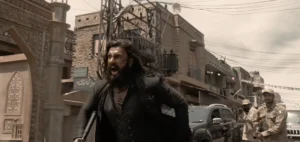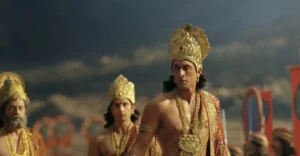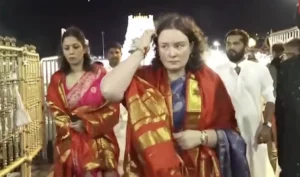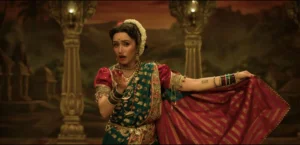
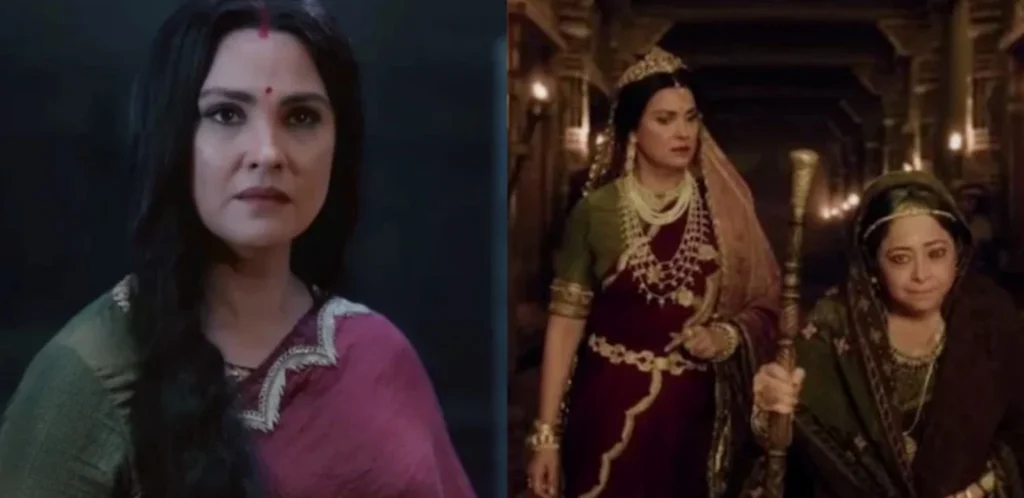
For generations, Kaikeyi has been remembered as the queen whose two demands changed the course of the Ramayana and sent Lord Rama into 14 years of exile. Her decision to seek the throne for her son Bharat instead of Rama has often earned her the label of a cruel stepmother. However, actress Lara Dutta believes that Kaikeyi’s story deserves to be understood beyond this familiar image. The actress has now opened up about her character in Nitesh Tiwari’s film adaptation of the Ramayana, explaining why she does not consider Kaikeyi a conventional villain.
In a recent interview with SCREEN, Lara discussed Kaikeyi’s personality, her relationship with Rama, the influence of Manthara and the difficult decisions that eventually led to Rama’s exile. She also shared an interesting interpretation of the character, saying that Kaikeyi may have been born with a divine purpose: to set in motion the events that would ultimately help Lord Rama fulfil the prophecy of defeating Ravana and restoring peace on Earth.
According to Lara, the character has often been judged only by the consequences of her decision, while the circumstances behind her actions have received much less attention. She believes Kaikeyi was a woman caught between her responsibilities as a mother, her promises to her family and her understanding of what was rightfully due to her son.
Lara Dutta says Kaikeyi was never against Lord Rama
One of the most important aspects Lara highlighted during the interview was Kaikeyi’s affection for Rama. The actress explained that, in several interpretations of the epic, Kaikeyi shared a particularly close relationship with her stepson and may have loved him as much as, or even more than, her biological son Bharat.
The film also explores this emotional connection. Lara pointed out that Kaikeyi is shown caring for Rama during his childhood and offering him the first bite of food. She also described a scene in which Kaikeyi happily prepares for Rama’s coronation by selecting his clothes and jewellery. According to the actress, her character does not initially oppose the decision to make Rama the next king of Ayodhya.
This detail is important because it presents Kaikeyi as more than someone who simply wants political power for her own family. Her transformation takes place later, when Manthara reminds her of the promises associated with her marriage to King Dasharatha and the future of her son Bharat.
Lara believes that the audience needs to understand this emotional background before judging Kaikeyi’s actions. Her character’s decision is not presented as the result of hatred towards Rama. Instead, it emerges from a complicated mixture of maternal responsibility, old promises, family expectations and the political situation within the kingdom.
How Manthara influenced Kaikeyi’s decision
Another major part of Lara’s character interpretation is Kaikeyi’s relationship with Manthara, played by Sheeba Chaddha. The actress praised Sheeba’s performance and said that the two characters are deeply connected. Without Manthara’s presence and influence, Kaikeyi’s transformation would not have carried the same emotional weight.
According to the backstory discussed by Lara, Kaikeyi was the only daughter in a family of men and lost her mother during childbirth. Manthara raised her and became much more than a caretaker. She was effectively a mother figure in Kaikeyi’s life. This history helps explain why Kaikeyi trusted Manthara and why her advice could have such a powerful influence on the queen.
Lara described their relationship as complicated. Manthara may have been manipulative and narrow-minded, but her influence on Kaikeyi was significant because of the emotional bond they shared over many years. This relationship becomes particularly important when Manthara reminds Kaikeyi of the promises made by Dasharatha.
The film’s portrayal therefore places considerable importance on the conversations between the two women. Rather than treating Manthara simply as a character who creates trouble, it explores how personal history, trust and influence can shape decisions with consequences far beyond an individual household.
The two promises that changed the fate of Ayodhya
Lara also explained the background of the promises associated with King Dasharatha and Kaikeyi. According to the backstory she discussed, Kaikeyi was raised as a warrior princess and was skilled at driving chariots. She had even driven Dasharatha’s chariot during a battlefield encounter and helped save him when his life was in danger.
Grateful for her courage, Dasharatha promised to fulfil a wish of hers. Kaikeyi did not ask for anything at that moment and reportedly told him that she had only performed her duty. However, that promise later became important when Manthara reminded her of it.
Lara also discussed another promise connected to Kaikeyi’s marriage. Her father was reportedly reluctant to marry his daughter to Dasharatha because she would become his third queen. In the film’s backstory, Dasharatha assured Kaikeyi’s father that her son would eventually inherit the throne of Ayodhya, even if he was not the eldest prince.
These promises provide the background to Kaikeyi’s demand that Bharat be crowned king. From her perspective, she was trying to protect what she believed had been promised to her son. Lara described the character as being caught between her love for Rama and her responsibility towards Bharat.
She explained that Kaikeyi believed she had to stand up for her son’s position in a kingdom where royal politics and questions of succession could determine the future of an entire family. This does not mean that her decision had no painful consequences, but it offers another way of understanding the reasons behind it.
Why Lara believes Kaikeyi had a divine purpose
The most striking part of Lara’s explanation was her reference to another interpretation of Kaikeyi’s role in the larger story of the Ramayana. The actress said that Kaikeyi is often portrayed as a villain, but another version suggests that she was born with a divine purpose: to help Lord Rama fulfil the prophecy of defeating Ravana and restoring peace and faith on Earth.
According to this interpretation, Rama’s exile was a turning point in the events that followed. Had he remained in Ayodhya and become king, the sequence of events leading to Sita’s abduction by Ravana and the eventual battle in Lanka might never have unfolded in the same way.
Lara believes that Kaikeyi therefore occupies a central place in the epic. Her decision causes immense personal suffering, but it also sets the larger story into motion. The actress argued that without Kaikeyi’s role in Rama’s exile, the familiar course of the Ramayana would have been very different.
She also made it clear that understanding Kaikeyi’s possible divine purpose does not mean ignoring her regret. The character eventually realises the consequences of her demands, but by then Rama is bound by his father’s word and his own commitment to dharma. The events have already moved beyond her control.
Lara Dutta on portraying Kaikeyi’s guilt and emotional transformation
For Lara, one of the biggest challenges was portraying Kaikeyi’s emotional journey in a limited number of scenes. The character moves through several stages, from being a loving mother and a supportive queen to becoming determined to secure Bharat’s future, before finally confronting the pain caused by her decision.
The actress said she deliberately kept her performance restrained rather than relying on exaggerated emotions. She wanted to show the character’s dignity and inner conflict, particularly when Kaikeyi begins to understand what Rama’s exile actually means for the family.
According to Lara, the moment of remorse was especially challenging because Kaikeyi realises that her request has created a situation that cannot simply be undone. Rama has accepted his father’s promise as his duty, and even Kaikeyi’s regret cannot reverse the decision.
She also spoke about the emotional impact of the scene in which Rama leaves for the forest. For Lara, seeing the audience feel Kaikeyi’s pain and remorse during that sequence was more meaningful than receiving written praise for her performance.
Lara Dutta praises Ranbir Kapoor, Yash and Arun Govil
During the interview, Lara also spoke about working with the film’s cast. She described sharing screen space with Arun Govil, who became widely known for playing Lord Rama in Ramanand Sagar’s iconic 1987 television series Ramayan, as a privilege. She felt his understanding of the epic and its emotional world helped guide the cast.
She also discussed the physical demands of working on a large-scale mythological film. Heavy costumes, crowns, jewellery and wigs made the performances difficult, with Lara recalling that the combined weight of the costume and accessories could reach approximately 15 to 16 kilograms.
Lara had particular praise for Ranbir Kapoor’s portrayal of Lord Rama. She explained that playing a revered divine character requires a different acting approach because the performance cannot depend entirely on conventional expressions of anger, happiness or other intense emotions. According to her, Ranbir had to maintain a sense of calm, restraint and inner focus throughout the film.
She also praised Yash’s portrayal of Ravana, noting that the character offered a different emotional range. While Ravana could express anger and intensity, Rama and Sita required a more controlled and composed screen presence. Lara appreciated the effort made by the actors to maintain these distinct characterisations.
Her comments offer a glimpse into the thinking behind the film’s interpretation of some of the Ramayana’s most familiar characters. Rather than presenting the epic only as a straightforward conflict between good and evil, the film also explores the personal relationships, promises, emotions and difficult choices that shape its central events.
Why Kaikeyi remains one of the most debated characters in the Ramayana
Kaikeyi’s role has remained a subject of discussion across generations because her decision affects almost every major event that follows. She is remembered for asking Dasharatha to make Bharat king and send Rama into exile, but the reasons behind that decision have been interpreted differently across retellings of the epic.
Lara Dutta’s comments bring attention to the emotional and political background of the character. Her interpretation does not deny that Kaikeyi’s demands caused suffering or that the queen later regretted her actions. Instead, it encourages audiences to look at the motivations, promises and relationships that shaped her choices.
Ultimately, Lara believes that Kaikeyi cannot be understood simply as an evil stepmother. She was also a mother, a queen, a warrior princess and a woman influenced by the promises made to her family. Her decision changed the destiny of Ayodhya, but it also became an essential part of the events that define the Ramayana.
With her portrayal in Nitesh Tiwari’s Ramayana, Lara Dutta has attempted to bring out these different sides of Kaikeyi. Her central argument is clear: a character who helped set the epic’s greatest events in motion deserves to be understood in all her complexity, rather than remembered only for the decision that sent Lord Rama into exile.